

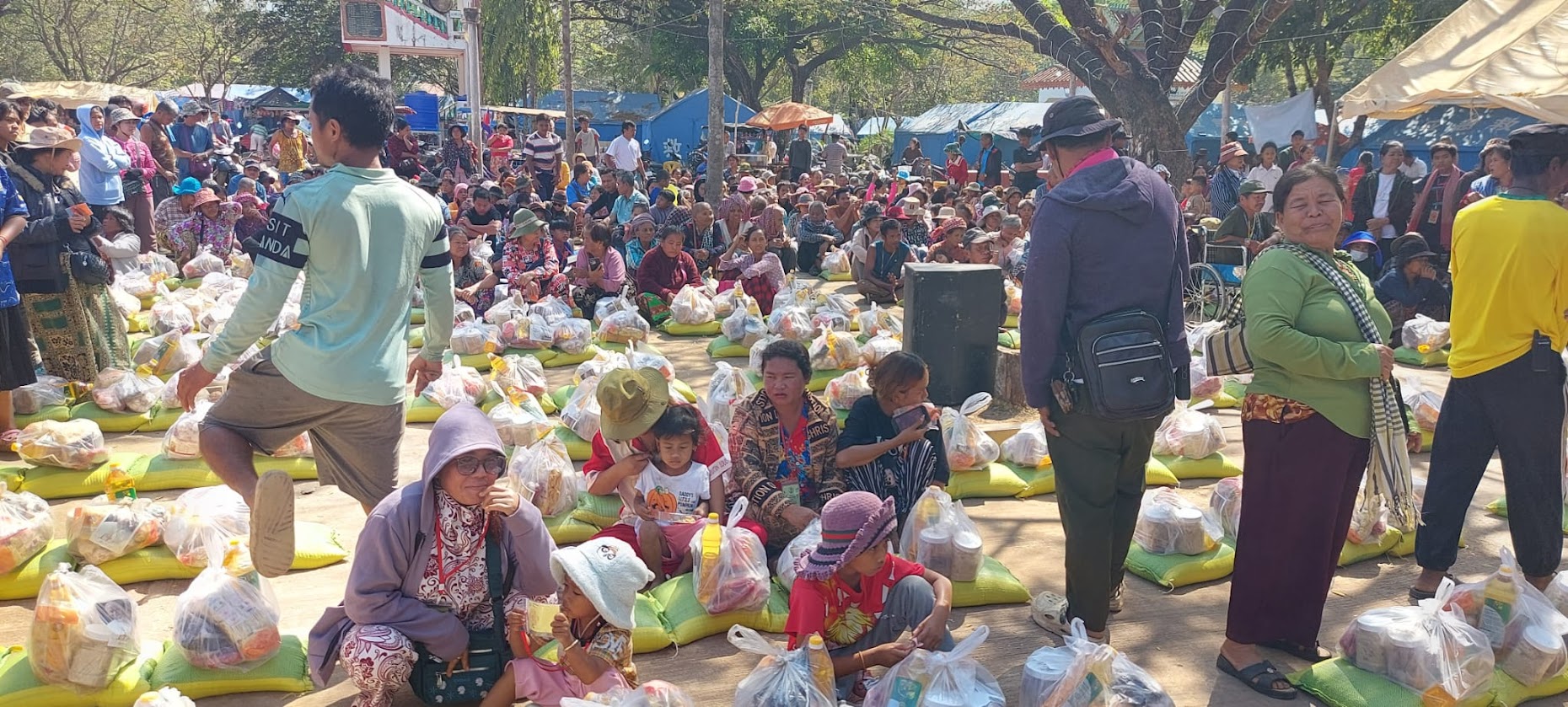
It may surprise you to learn that although the Cambodia/Thailand border dispute may have dropped off the front pages/news bulletins in the UK…. it hasn’t gone away and shows no signs of doing so any time soon. During the Trustee Visit in January, Katie Maidment and Rosemary Downing were able to see some of the current situation at first hand.
THE BACKGROUND
Cambodia and Thailand have been disputing the position of the border between their two countries for more than a century, when the borders were redrawn after the French occupation of Cambodia. The main source of disagreement is an 11th century temple ownership of which is claimed by both countries and which has sparked sporadic clashes over many years.
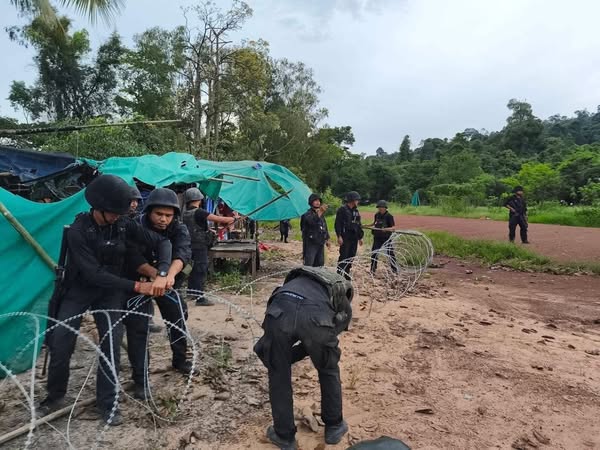

In May 2025, Cambodia banned [among other things] imports of vegetables, electricity and internet services after a Cambodian soldier was killed. In July serious fighting broke out along the northern border. “At least 48 people were killed and thousands displaced during five days of fighting. Donald Trump then intervened and, with the help of Malaysia, negotiated an [uneasy] ceasefire.” [source: BBC News].
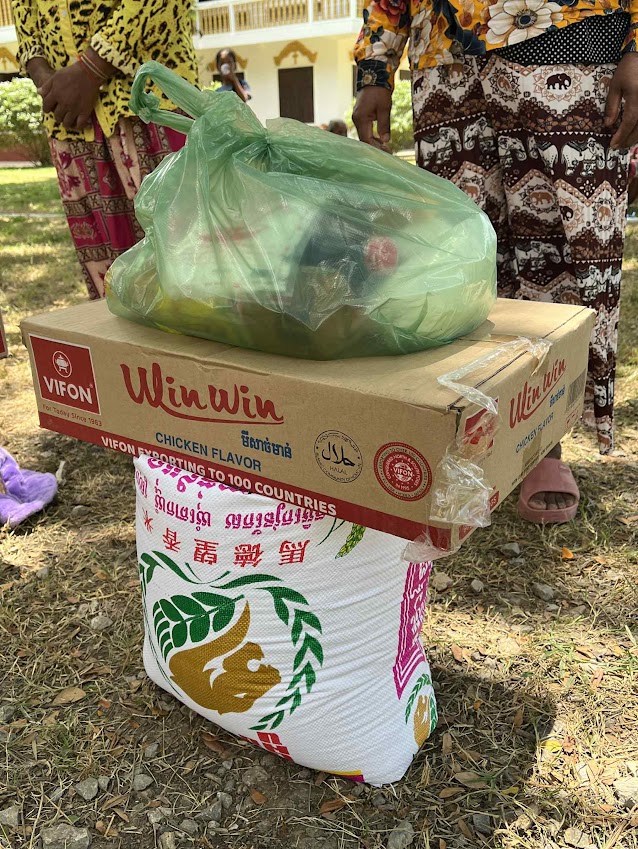
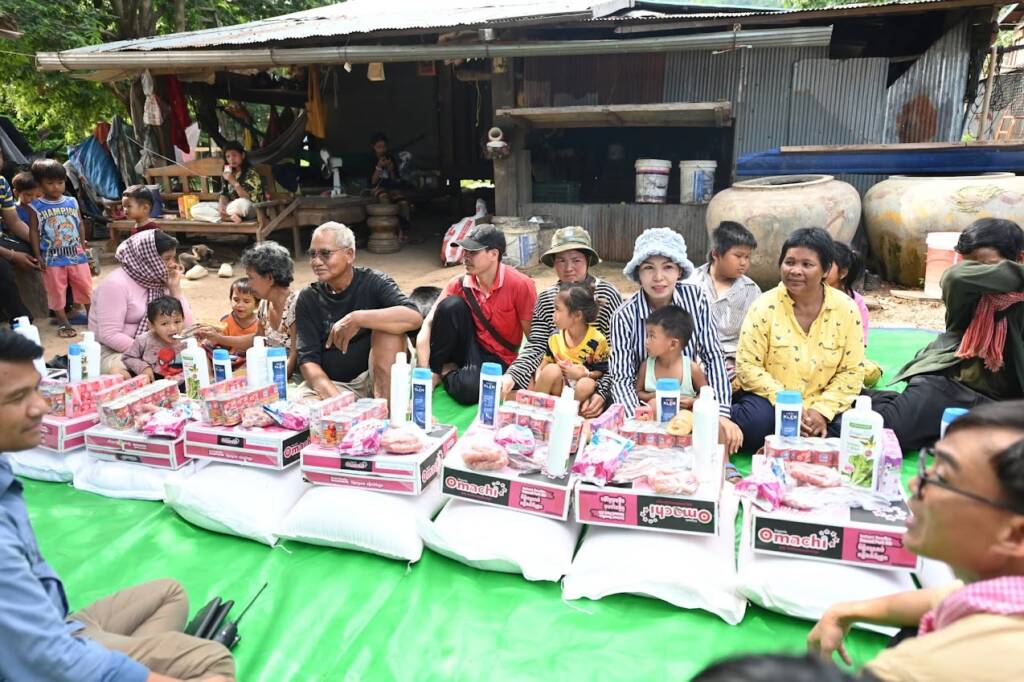
Aid agencies and NGO’s including Support Cambodia, mounted an aid effort to help people sheltering in various parts of the Battambang Prefecture. More on this at https://supportcambodia.org.uk/mango-autumn-2025/
DECEMBER 2025
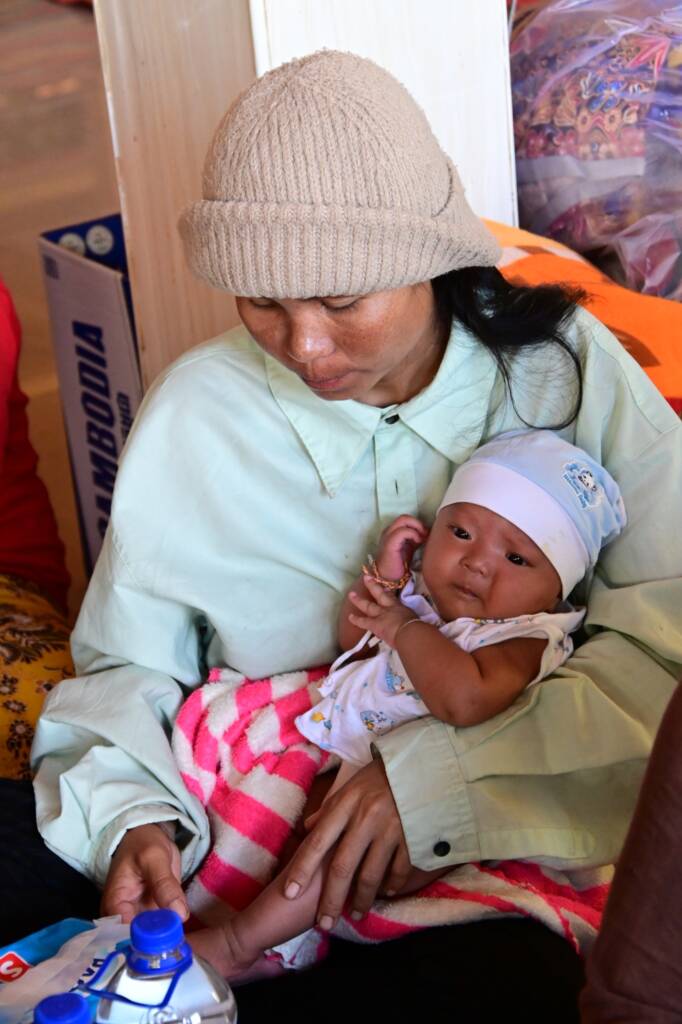
Then, in December the ceasefire broke down and more serious fighting broke out along the whole length of the border from Tbeng Meanchey in the north-east to Ko Kong in the south-west. Over half a million innocent people were again displaced and are now living in huge evacuee camps all over Northwest Cambodia.
Once again the aid agencies [including Support Cambodia] mobilised to do what they could to help. But this time, the situation was much worse: many thousands lost everything having fled their homes in the conflict zone with no time to collect anything, their houses mostly destroyed and/or looted and the border area dangerous with unexploded ordnance so they can’t go back. Many have no papers so they can’t prove who they are.


WHAT WE SAW
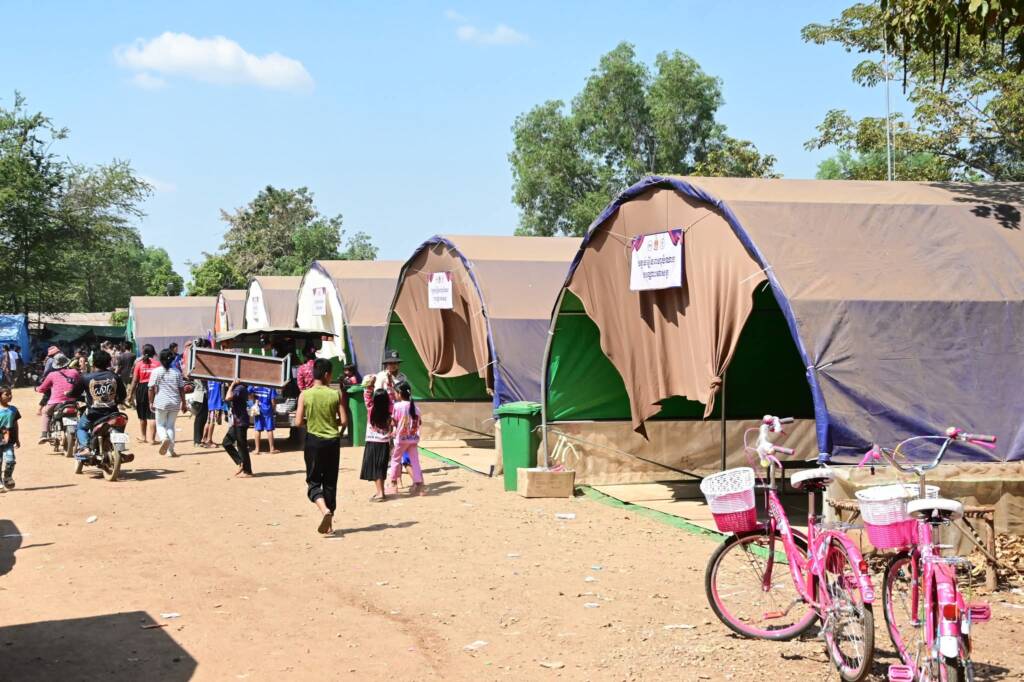
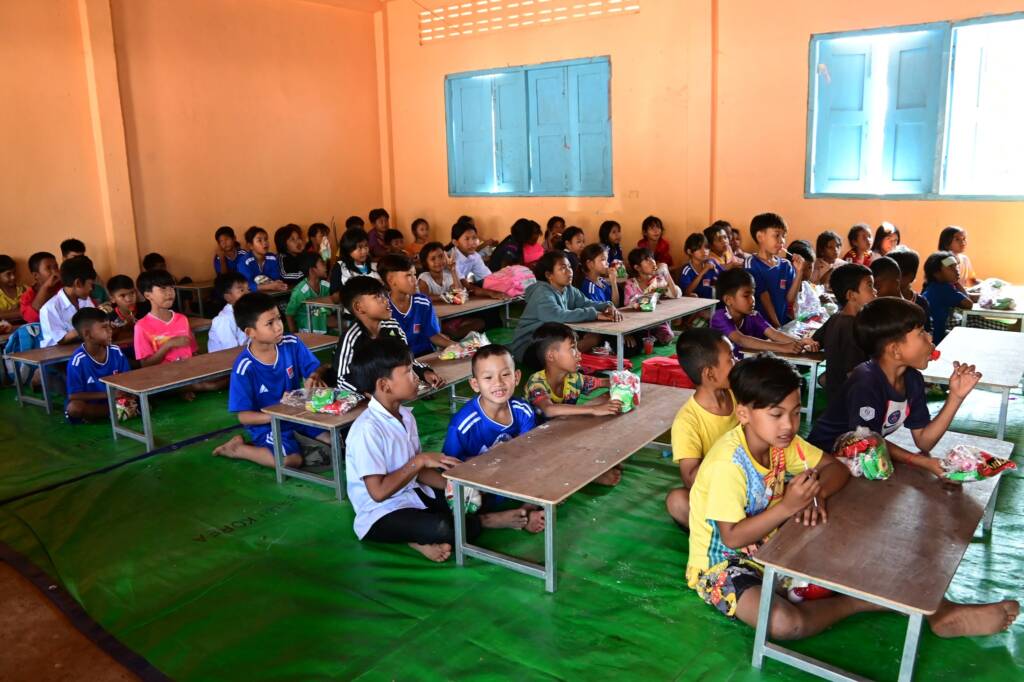
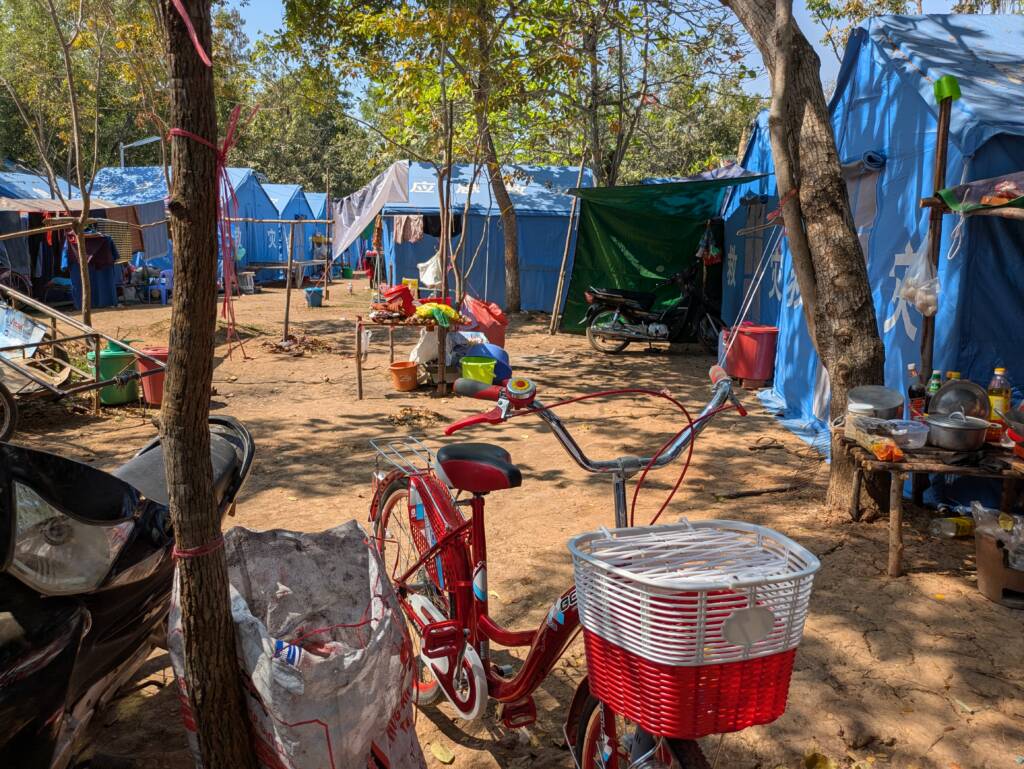
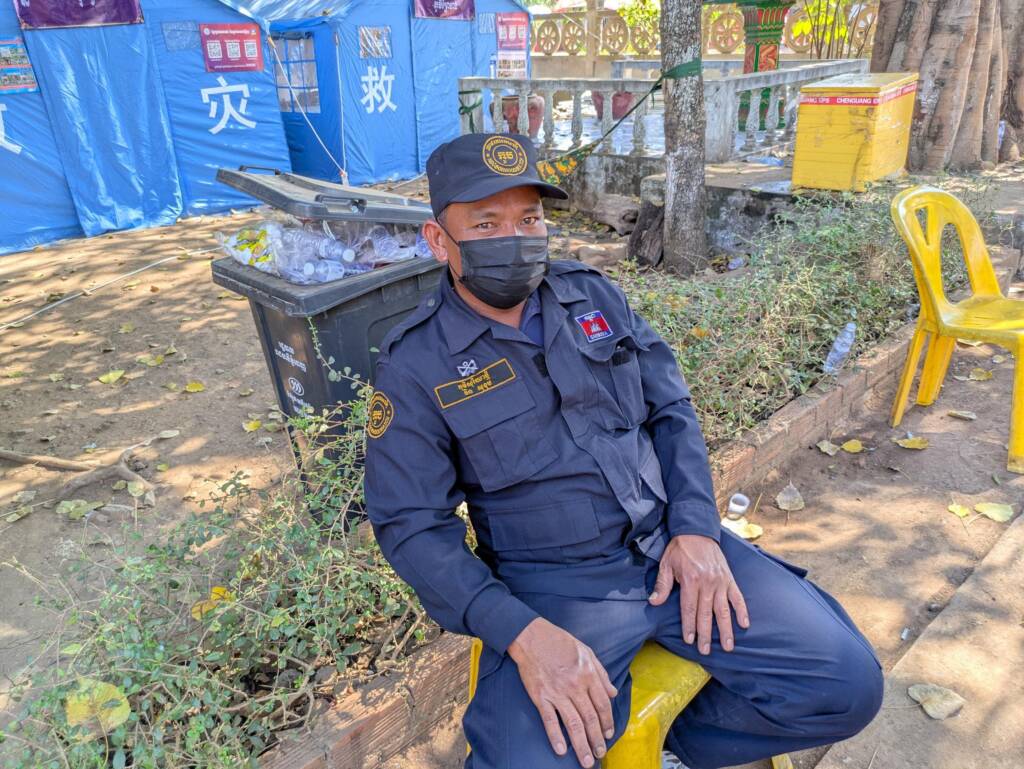
Katie and Rosemary had the opportunity to visit one such evacuee camp about 30k from the Thai border. Over 400 displaced families are living there in the grounds of the local pagoda. Most are housed in tents provided by China. The government has set up makeshift schools on site, staffed by volunteer teachers. The younger children attend these classes in the mornings while their older siblings go to the local secondary and high schools using bikes provided by the government – but we saw quite a few children obviously not doing this!!
Children are missing their friends, their extended family, their toys, their daily routine and are exposed to less desirable influences. The long term effect on their development is only to be imagined.

SREY MAO’s STORY
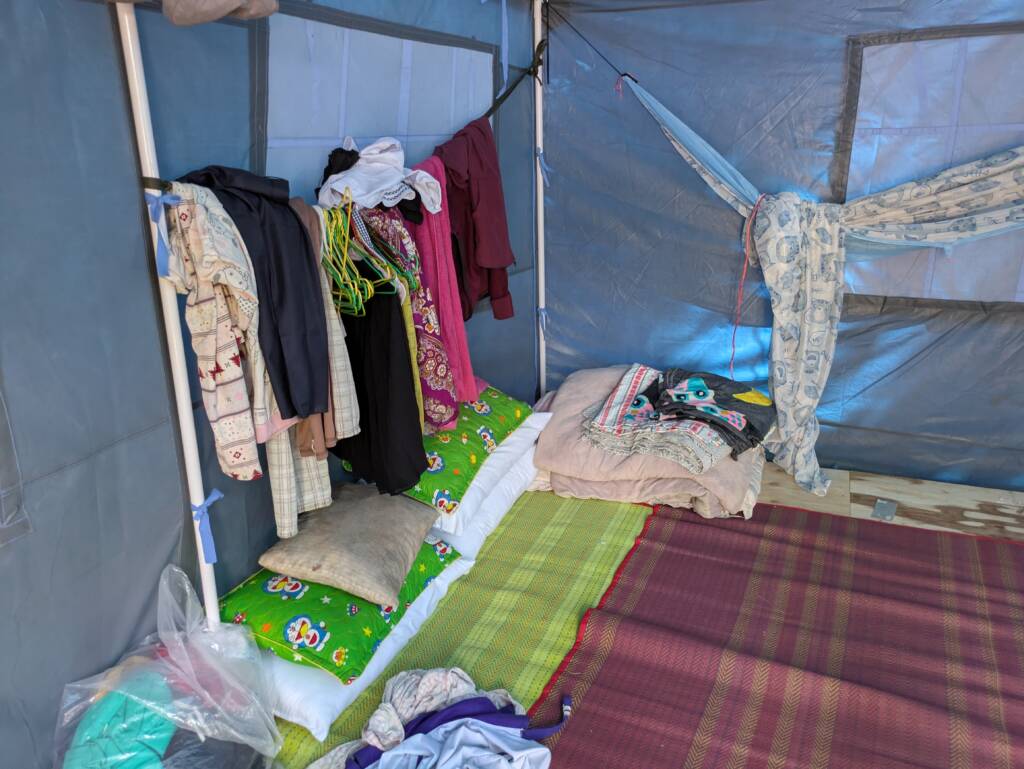
We spoke to one young mother. Her name is Srey Mao. She’s 34 and has two children, Choum Liay [6] and Choum Liang [10]. She used to be a baker but now can’t work. Her house on the border has been destroyed, all her possessions gone except her papers which she managed to save. This is her tent. Everything you see in the picture has been donated.
This is her second camp in two months.
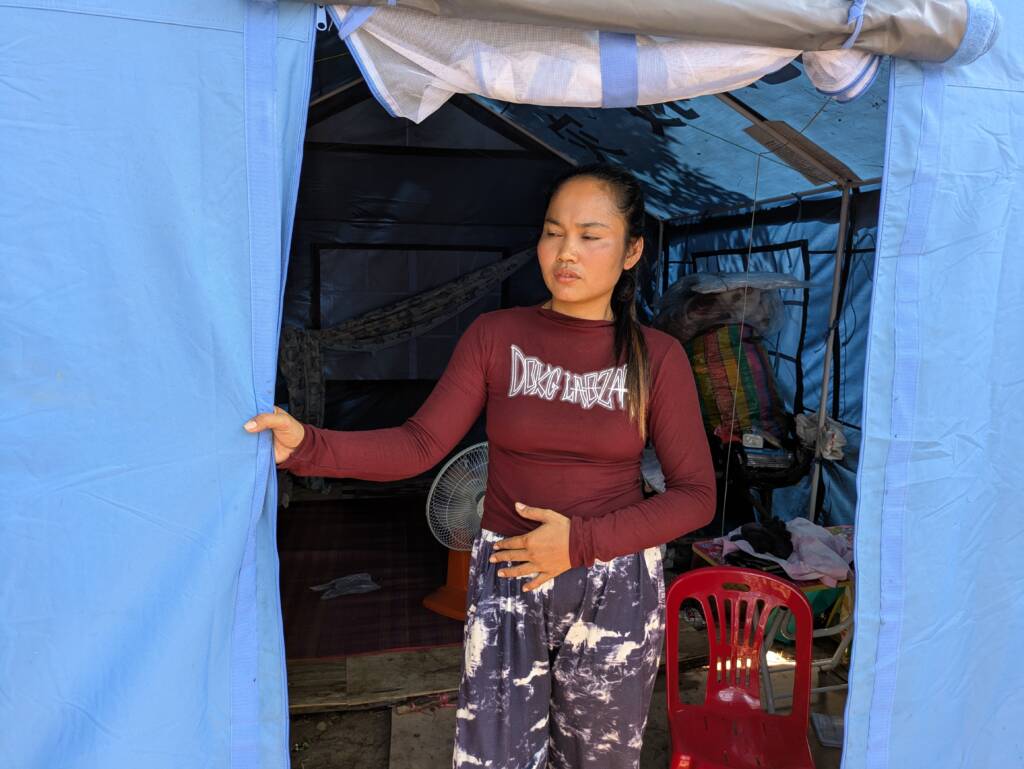
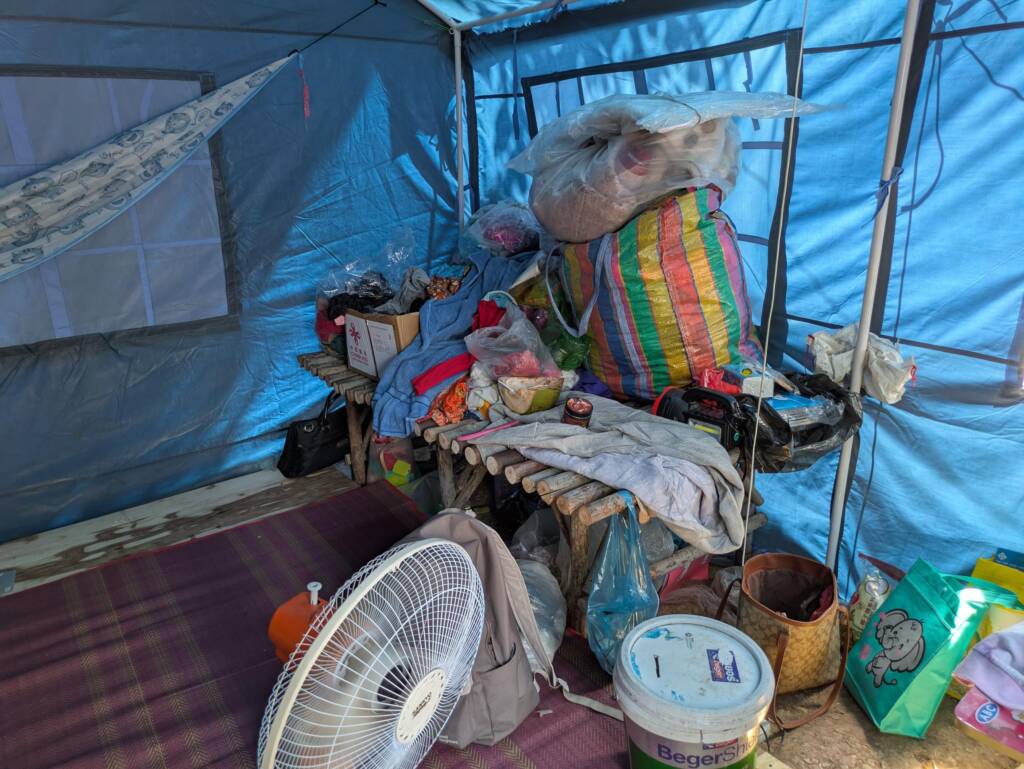
We asked about food and hygiene arrangements. Srey Mao is grateful for the food but says it’s monotonous and that toilet, washing and medical facilities are very limited. She doesn’t sleep well and like many others, suffers ongoing trauma caused by the conflict.
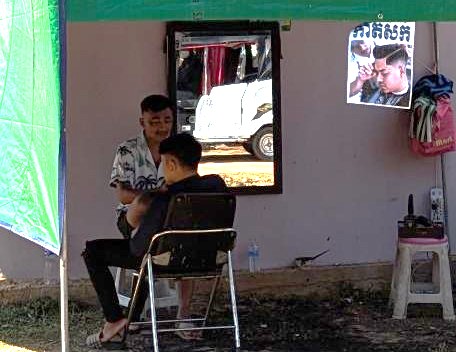
Boredom is a real issue in the camp. Although some have brought their businesses with them – for example, we saw a barber at work – most have nothing to do and no income.
The government says it will buy land to rehouse displaced families but this has yet to happen and anyway, those without papers may find this very difficult. The resulting uncertainty combined with the boredom creates a situation ripe for unrest in the camp.
THE CURRENT SITUATION [March ’26]
The ceasefire is holding but currently there is no prospect of a permanent peace agreement between the two governments…. essential before any resettlement can begin.
It’s an increasingly desperate situation, especially as the raining season is not far away when the red dust and potholes will turn into red mud and huge puddles. With June temperatures climbing to 40c, unless facilities improve the risk of disease will greatly increase.
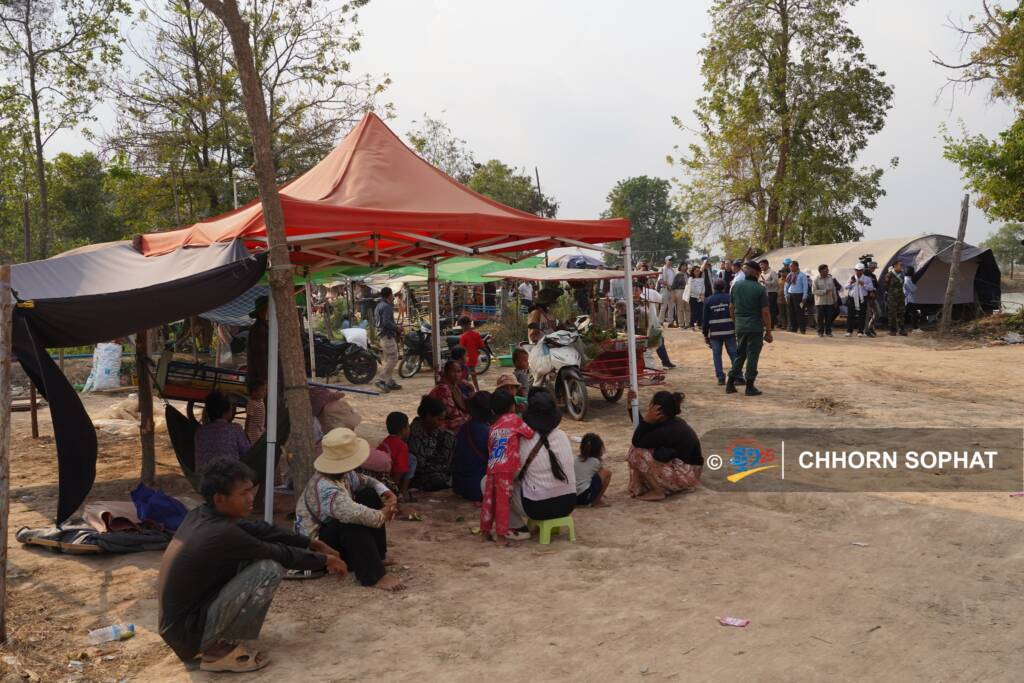
Picture from Cambodianess
This dispute is not about the ordinary citizens of either country who are, for the most part, at the mercy of their respective governments, though there we saw plenty of evidence of anti-Thai sentiments on our travels,
eg: the “No Thai Goods Sold Here” notice on the door of a Battambang supermarket.
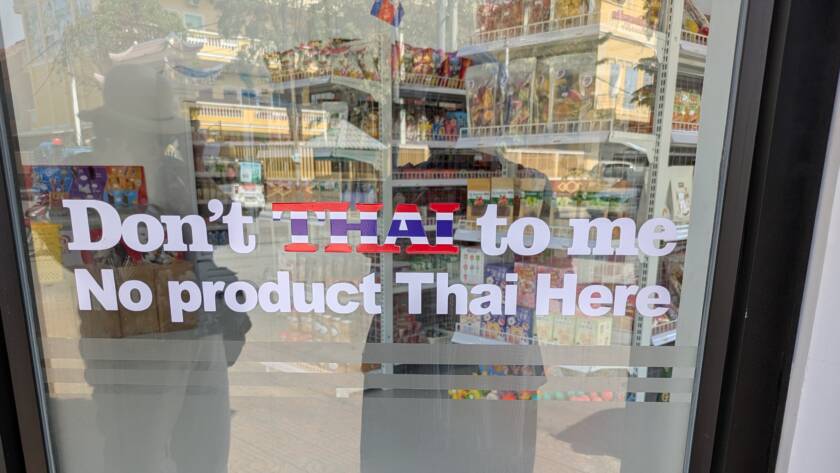
The price and availability of basic goods eg: toothpaste and fresh vegetables has risen sharply with the poorest families most affected. Tourism, the country’s No.1 industry has suffered since the land borders have been closed – Battambang was very quiet, similar to when we were there after Covid – and some businesses will not survive.
HOW AID IS HELPING
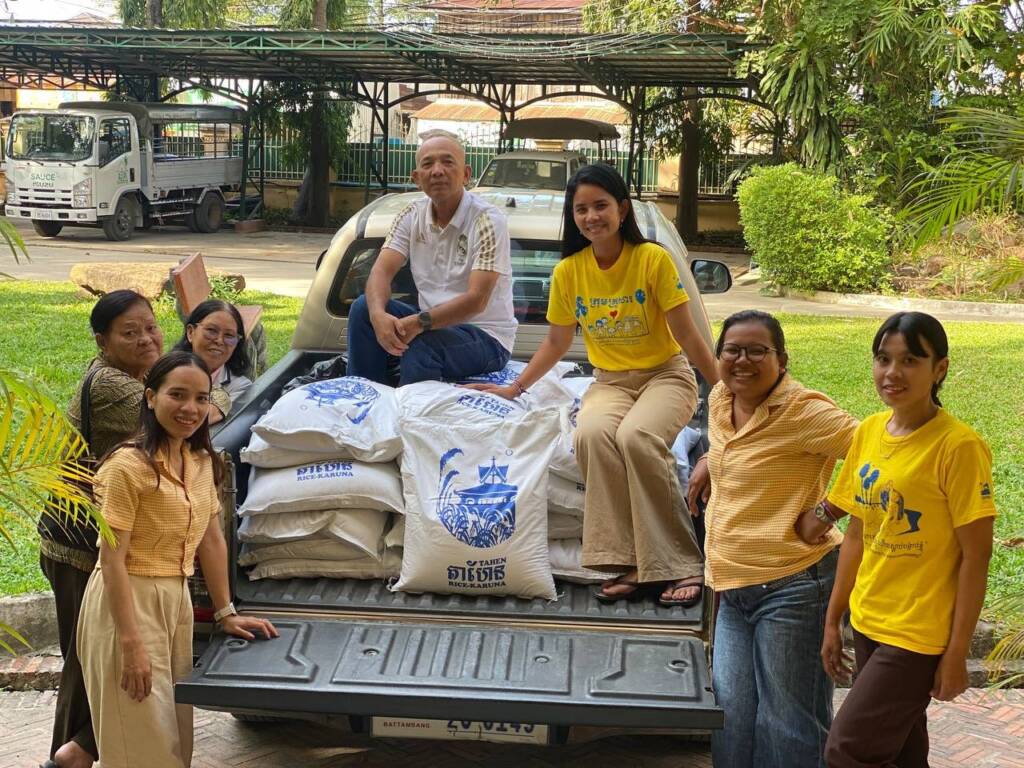
NGO’s including the Apostolic Prefecture of Battambang, through it’s social outreach arm Karuna Battambang Organisation [KBO] and Caritas Cambodia have been regularly visiting camps to distribute aid: rice, seasonings, canned fish, dried fish, milk powder, nappies, cooking oil, drinking water and laundry soap.
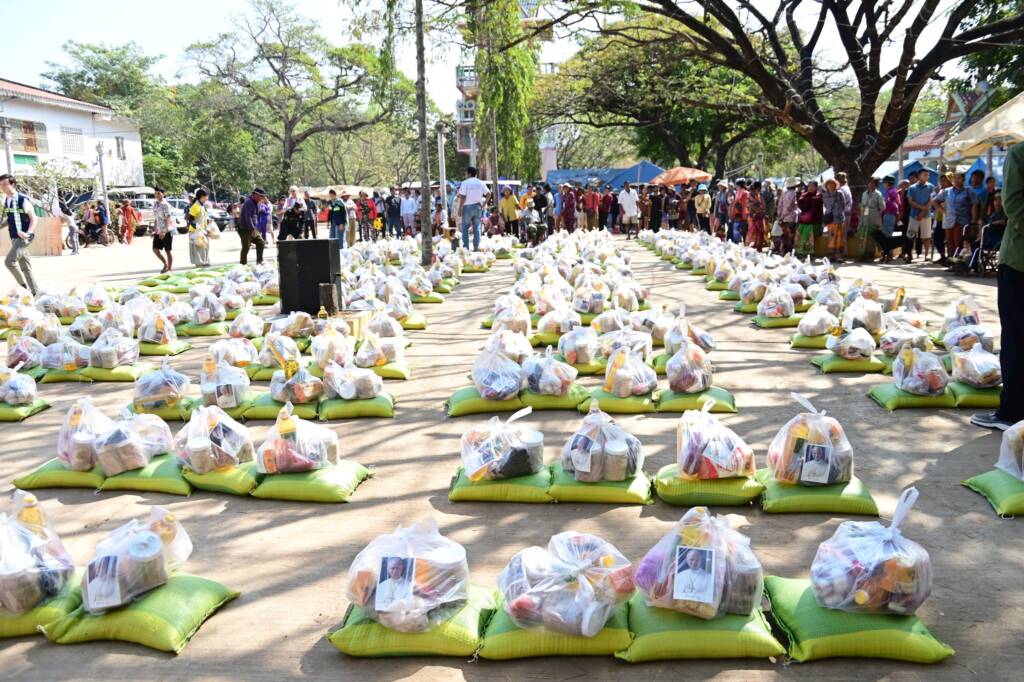
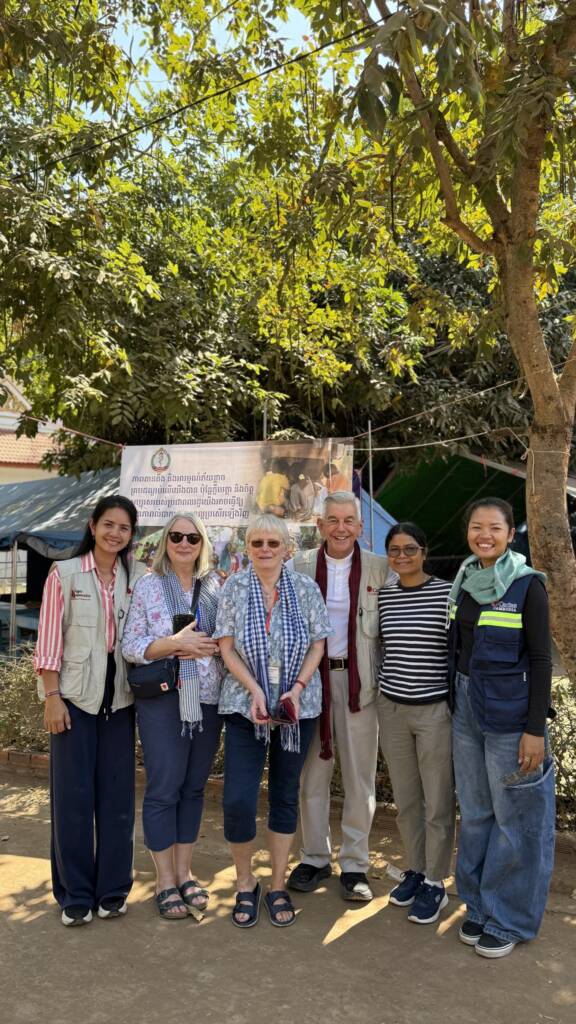
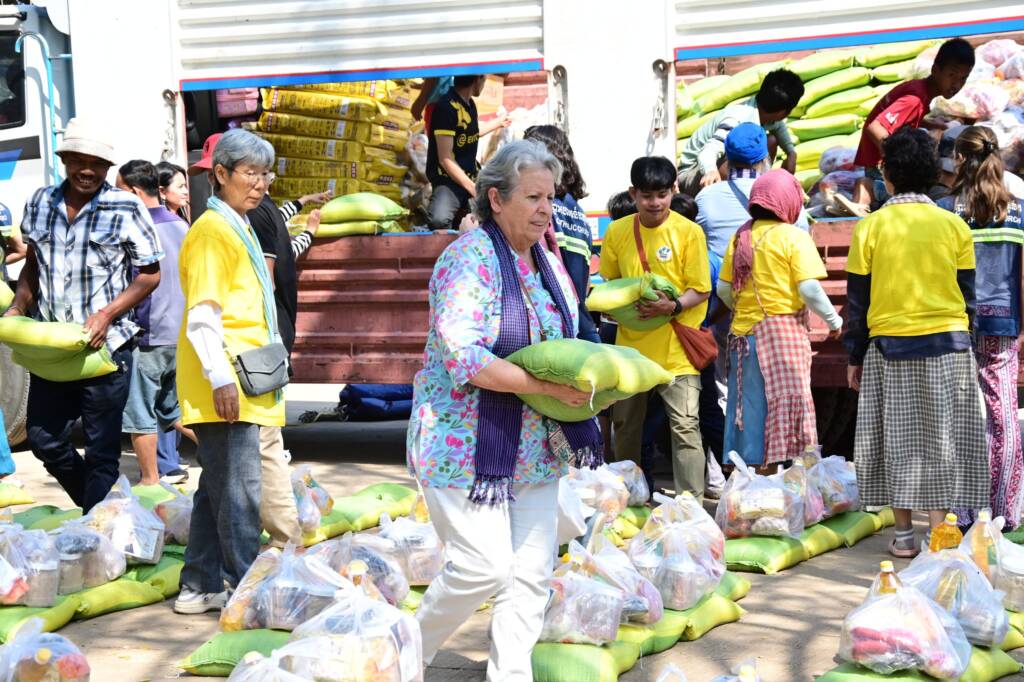
How do we know the aid is actually reaching the people who need it?
The Prefecture is mostly distributing to people previously known to them or to families sheltering in centres monitored by the Prefecture. That way, misuse of aid is minimised.
What has been Support Cambodia’s contribution?
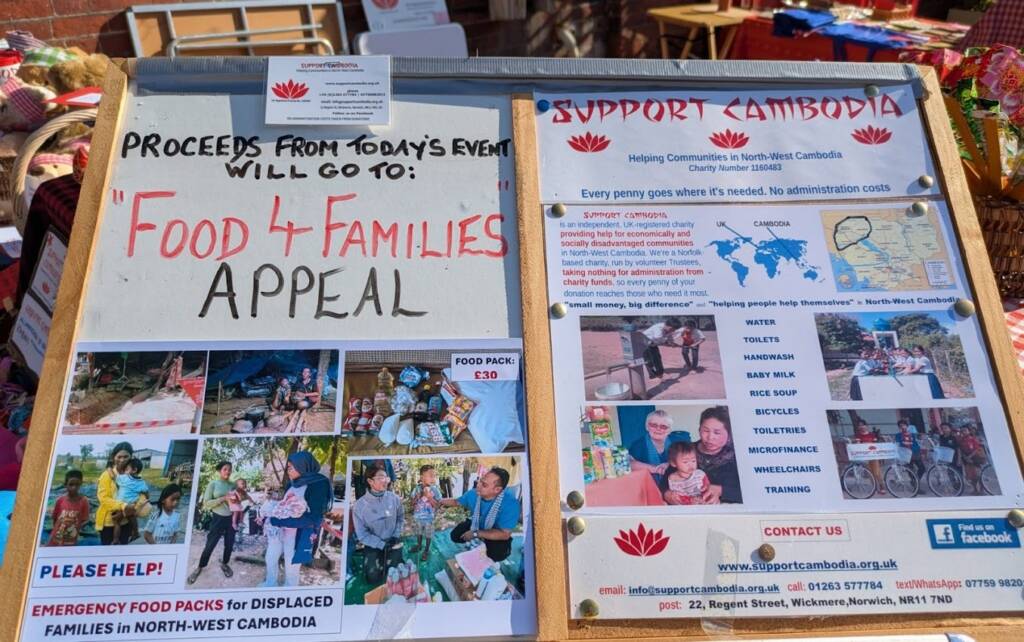
Since August ’25, Support Cambodiahas contributedover $6000to the relief effort.Every penny of that money is making a difference.
Thank you.
Some of these images are from the Apostolic Prefecture of Battambang and used with permission.
